So you just landed an in-house role at an AI company. Whether your focus is legal, compliance, or product governance, one of the first things you’ll notice is how fast things move. AI products iterate quickly, conversational interfaces evolve daily, and new features or upgrades can roll out in hours.
Amid all this speed, there’s a hidden risk that often gets overlooked: ensuring that every user agreement or contractual acceptance is properly tracked and defensible.
In other words, you need robust contract audit trails and acceptance records.
Without them, you could be exposed to enforceability challenges, regulatory scrutiny, or even disputes with enterprise clients. For AI companies that rely on chatbots, voice assistants, or dynamic AI tools, maintaining reliable records is not optional—it’s critical.
This guide walks you through what contract audit trails are, why they matter for AI products, and how your team can implement them to protect your company and its users.
Why Audit Trails Matter for AI Contracts
AI products are unique because of their dynamic and iterative nature. Unlike static SaaS dashboards, AI products often include:
- Conversational AI interactions (chatbots, in-app assistants)
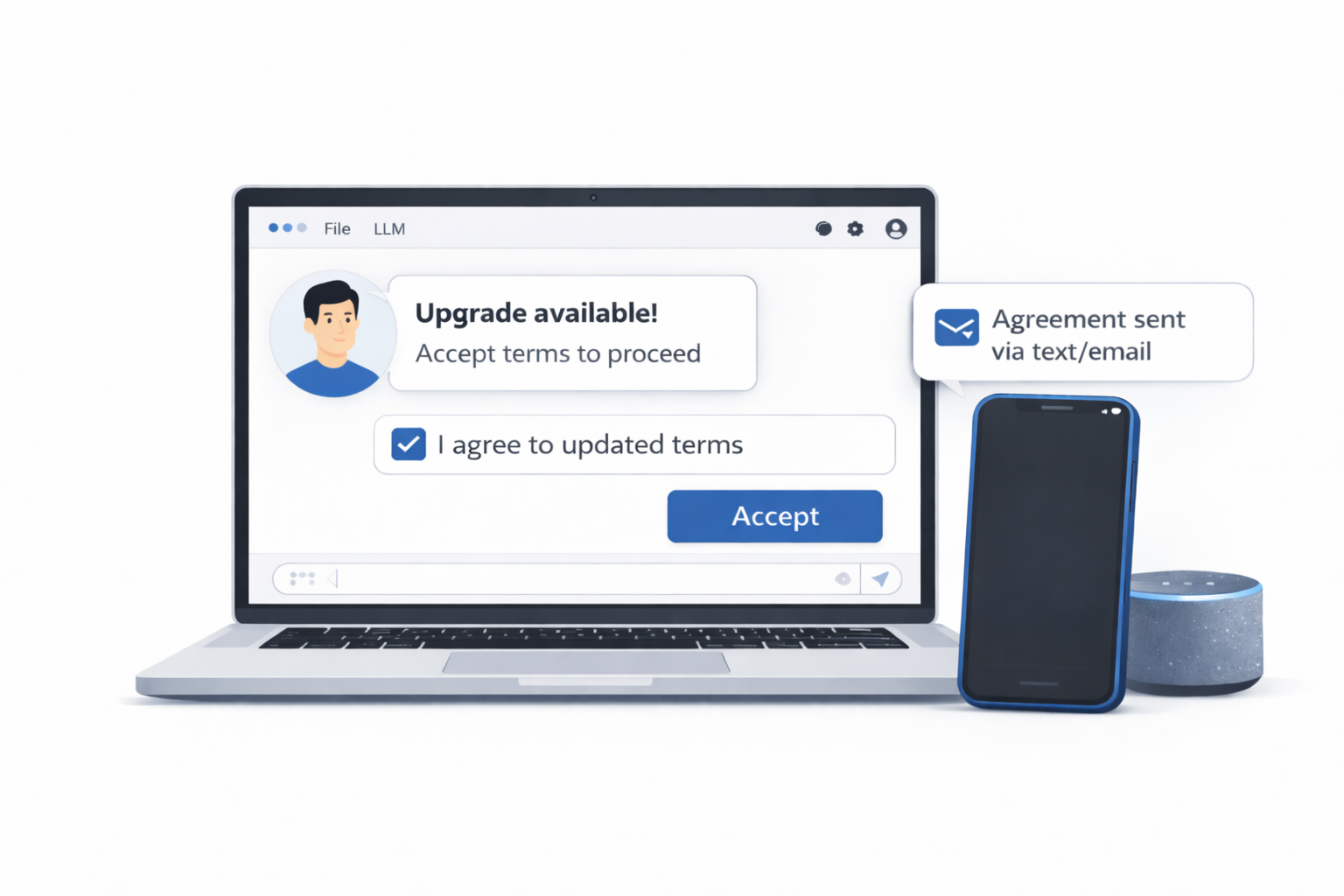
- Voice AI workflows (smart assistants sending text or email links for consent)
- Dynamic features or upgrades (new functionality that changes the terms of service or pricing)
Each of these creates a scenario where users may accept terms or modifications without a traditional click. Courts evaluating online agreements focus on three elements:
- Notice: Did the user have a reasonable opportunity to see the terms?
- Review: Could the user reasonably review the terms before agreeing?
- Assent: Did the user take an affirmative action that clearly indicates agreement?
Audit trails document that these three elements occurred. Without them, a legal team may struggle to prove enforceability.
What a Contract Audit Trail Includes
A strong audit trail captures all the essential details that demonstrate proper agreement formation. For AI products, that typically includes:
- User identity: The account, email, or phone number that accepted the terms
- Agreement version: The exact terms the user agreed to, including timestamps
- Acceptance action: Checkbox clicks, button taps, or explicit verbal confirmations
- Contextual metadata: Device type, interface used (web, app, chatbot, voice), and location if relevant
- Change history: A record of any updates to the agreement and when each user accepted the new version
Without this data, it’s difficult to verify who agreed to what and when—critical if a dispute arises.
Real-World Scenarios in AI Companies
1. Chatbot Upsells and In-App Upgrades
Your company launches a premium feature in a chatbot. A user requests access, and the chatbot offers an upgrade that changes service terms or pricing.
If you capture the acceptance only as a “yes” in chat, you lack structured evidence. A proper audit trail should include:
- Timestamp of the acceptance
- Link to the specific version of terms that applied
- User identity and interface used
2. Voice AI and Post-Interaction Acceptance
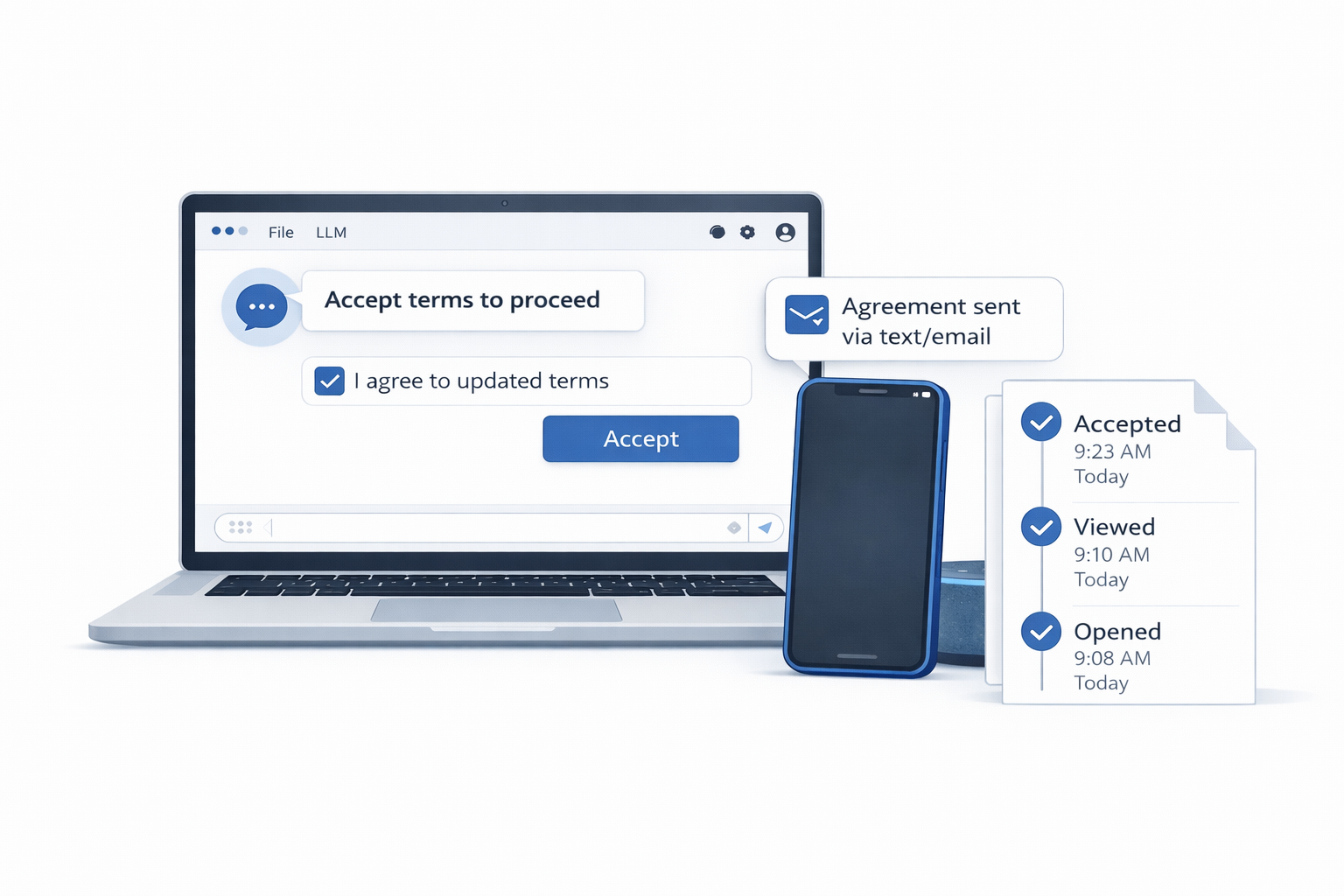
Voice assistants often cannot display full agreements in real time. A common workflow is to follow up via text or email with a link to the updated terms.
A complete acceptance record in this scenario should track:
- The time the message was sent
- Confirmation that the user clicked and accepted the agreement
- Device and interface metadata
- Version of the agreement signed
This ensures that verbal interaction plus follow-up still counts as legally enforceable acceptance.
3. Dynamic Feature Releases
AI platforms frequently roll out new features that may update privacy policies, service levels, or data handling terms. Each update must be associated with a clickwrap or equivalent acceptance process and logged properly.
Tracking this in an audit trail ensures that you can demonstrate compliance with legal obligations, internal policies, and enterprise client requirements.
Best Practices for Implementing Audit Trails in AI Products
1. Always Capture Affirmative Assent
Whether in-app, chatbot, or voice AI, require users to explicitly indicate agreement. Passive methods like implied consent or continued usage are weaker legally.
2. Version Control for Terms
Store each version of terms separately, and link acceptance to the exact version at the time of consent. This prevents ambiguity if terms change.
3. Log Metadata
Record device, IP address, interface (chat, app, voice), and timestamp. This metadata strengthens the enforceability of your records.
4. Ensure Consistency Across Workflows
Every acceptance flow should follow the same process, whether the user is on a web app, mobile app, chatbot, or voice assistant. Consistency avoids gaps and reduces risk.
5. Retain Records Securely
Acceptance logs should be stored in a tamper-proof system that meets compliance requirements for retention and audit.
AI Contract Audit Trail Checklist
Use this checklist as a reference to make sure your team captures defensible acceptance:
- Explicit user assent is required for all agreements and upgrades
- Every agreement version is stored and timestamped
- User identity is recorded alongside the acceptance
- Interface and device metadata are logged
- In-app upsells and dynamic features trigger proper acceptance capture
- Voice AI workflows have a clear clickwrap or confirmation step
- Acceptance records are stored securely and tamper-proof
- Audit logs are easily exportable for legal or regulatory review
Why AI Companies Often Overlook Audit Trails
Many AI startups prioritize speed of feature release and product engagement. Legal acceptance infrastructure is often implemented as an afterthought.
This creates risk when enterprise clients request audit reports, regulators inquire about compliance, or disputes arise. Implementing robust audit trails early avoids costly retroactive fixes.
How ToughClicks Helps
ToughClicks provides clickwrap infrastructure tailored for modern AI products, including:
- Clear acceptance presentation in dynamic conversational interfaces
- Consistent version control and logging
- Structured, tamper-proof audit trails
- Exportable records for internal and regulatory purposes
Using a dedicated platform allows legal and product teams to focus on AI innovation while maintaining enforceable records.
Final Thoughts
Landing an in-house role at an AI company is exciting. But as you dive into product and compliance workflows, remember this: without robust contract audit trails, enforceable acceptance is at risk.
Chatbots, voice assistants, and dynamic features all increase the speed and flexibility of AI products—but they also make clear, structured acceptance more critical than ever.
Implementing clickwrap agreements and maintaining comprehensive audit trails ensures your AI company can grow confidently while remaining compliant and legally protected.
Get started today with ToughClicks ->
.png?width=1000&height=500&name=_Wide%20tough%20clicks%20logo%20+%20slogan%20(1).png)